
Description
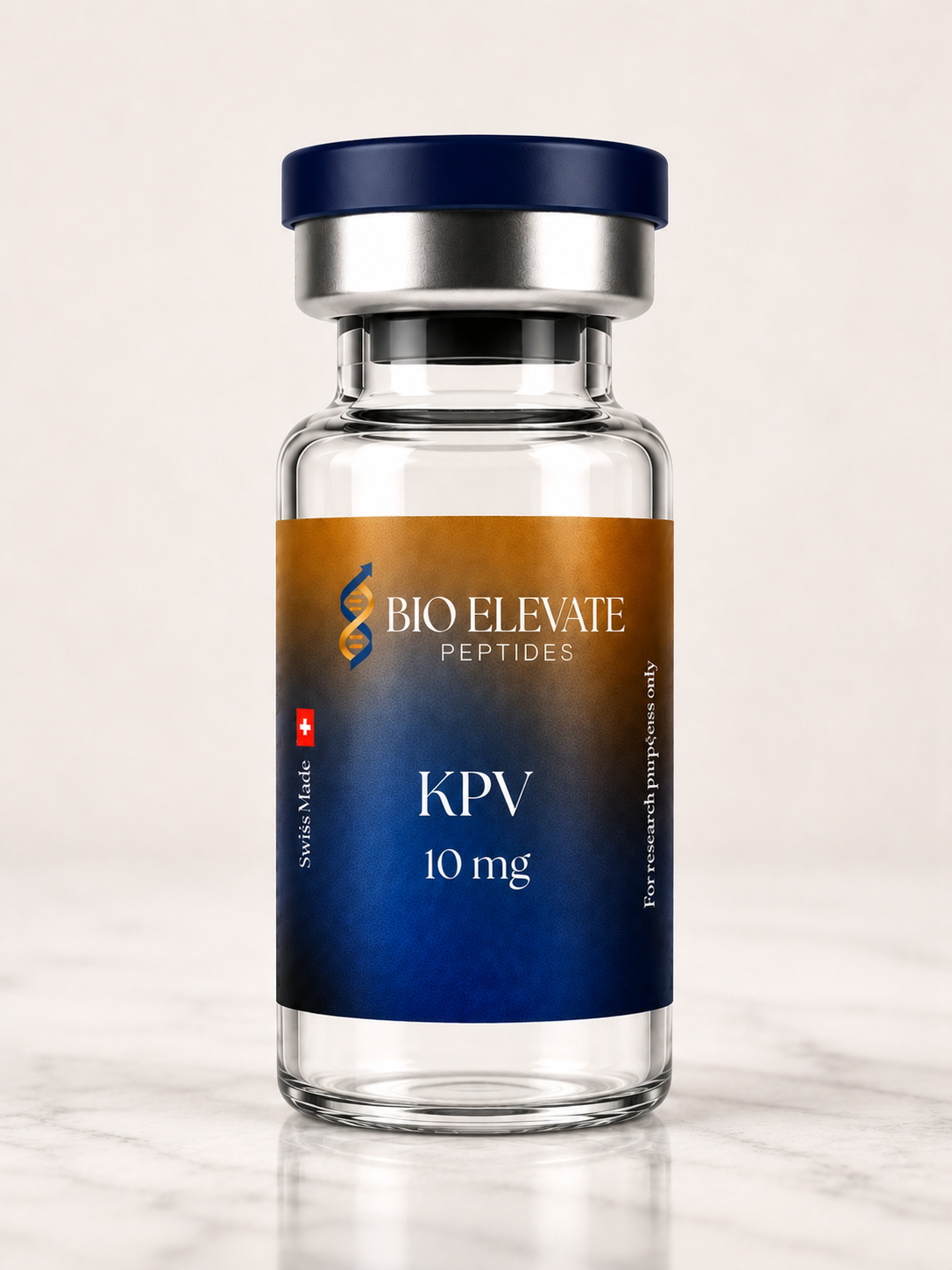
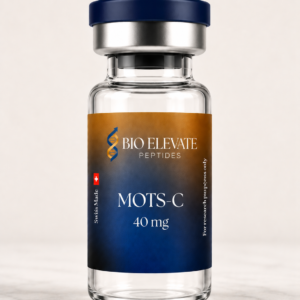
KPV | 10mg Research Grade · Swiss Manufactured · Lyophilized
Overview
KPV (Lysine-Proline-Valine) is a naturally occurring C-terminal tripeptide fragment of alpha-melanocyte-stimulating hormone (α-MSH), representing the minimal bioactive sequence responsible for a significant portion of α-MSH’s potent anti-inflammatory and immunomodulatory activity. Derived from the 11-13 amino acid position of the 13-residue α-MSH sequence, KPV retains the core biological activity of its parent peptide while offering a dramatically simplified molecular architecture — a tripeptide of just 340 daltons that crosses biological barriers with remarkable ease and exerts profound effects on inflammatory pathways, mucosal immunity, and tissue repair mechanisms. First characterized in detail through the pioneering work of Dr. Anna Catania and colleagues at the University of Milan, KPV has emerged as one of the most compelling research tools in mucosal immunology and gastrointestinal biology, with a research profile increasingly expanding into wound healing, dermatology, infection biology, and systemic inflammatory disease. Its unique capacity to act both locally at mucosal surfaces and systemically via melanocortin receptor engagement — combined with exceptional stability relative to full-length α-MSH — has positioned KPV as an indispensable research peptide at the intersection of immunology, gastroenterology, and regenerative biology.
Sequence
Lys-Pro-Val-NH₂
Molecular Formula: C₁₅H₂₉N₄O₄⁺ (as acetate salt) Molecular Weight: 340.42 g/mol CAS Number: 137fechas — 74892-84-5 Appearance: White lyophilized powder Purity: ≥ 99% (HPLC verified)
Origin & Structural Context
KPV’s relationship to α-MSH is fundamental to understanding its biological significance:
| Peptide | Sequence | Length | Primary Role |
|---|---|---|---|
| α-MSH (full) | Ac-Ser-Tyr-Ser-Met-Glu-His-Phe-Arg-Trp-Gly-Lys-Pro-Val-NH₂ | 13 AA | Full melanocortin agonist |
| KPV | Lys-Pro-Val-NH₂ | 3 AA | Core anti-inflammatory bioactive fragment |
- The C-terminal tripeptide KPV (positions 11-13) has been demonstrated to account for the majority of α-MSH’s anti-inflammatory potency despite comprising less than 25% of its sequence
- The C-terminal amidation (Val-NH₂) is structurally critical — preserved from the parent α-MSH molecule and essential for receptor interaction and biological activity
- KPV’s diminutive size confers significant pharmacokinetic advantages over full-length α-MSH: superior mucosal penetration, oral stability in certain delivery contexts, and reduced immunogenic potential
- Unlike full-length α-MSH, KPV exerts anti-inflammatory effects partly independent of classical melanocortin receptor binding, acting through direct intracellular NF-κB pathway modulation — a mechanistic distinction with important implications for research design
Mechanism of Action
KPV’s anti-inflammatory and immunomodulatory effects are mediated through several distinct but complementary molecular mechanisms:
Melanocortin Receptor Engagement
- KPV retains partial agonist activity at MC1R and MC3R — the melanocortin receptor subtypes most relevant to peripheral anti-inflammatory and immune-modulatory signaling
- MC1R activation on macrophages, dendritic cells, and keratinocytes drives cAMP-dependent suppression of pro-inflammatory cytokine production
- MC3R engagement contributes to resolution-phase inflammation biology and efferocytosis — the clearance of apoptotic cells from inflamed tissue — a critical step in returning inflamed tissue to homeostasis
Direct NF-κB Pathway Inhibition
- A mechanistically distinctive feature of KPV is its demonstrated capacity to directly inhibit NF-κB nuclear translocation independent of surface receptor engagement
- KPV enters cells via transporter-mediated mechanisms and acts intracellularly to prevent IκB phosphorylation and degradation, blocking the release and nuclear entry of NF-κB p65 subunit
- This intracellular mechanism of action means KPV retains anti-inflammatory potency even in cell types with low or absent melanocortin receptor expression — significantly broadening its research applicability
- Downstream NF-κB inhibition suppresses transcription of TNF-α, IL-1β, IL-6, IL-8, CXCL1, and a broad array of chemokines and adhesion molecules driving inflammatory cell recruitment
MAPK Pathway Modulation
- KPV inhibits activation of p38 MAPK and ERK1/2 signaling cascades — key intracellular amplifiers of the inflammatory response downstream of pattern recognition receptor and cytokine receptor engagement
- Attenuation of MAPK signaling reduces AP-1 transcription factor activity, further suppressing inflammatory gene expression through a pathway parallel to and synergistic with NF-κB inhibition
Inflammasome Suppression
- Emerging research has identified KPV-mediated inhibition of NLRP3 inflammasome assembly and activation — a critical platform for IL-1β and IL-18 maturation and release
- Inflammasome suppression is particularly relevant to KPV’s gastrointestinal research applications, where NLRP3 activation plays a central pathological role in inflammatory bowel disease models
Epithelial Barrier Integrity
- KPV promotes expression and correct localization of tight junction proteins including claudin-1, occludin, and ZO-1 in intestinal epithelial cell models
- Restoration of epithelial barrier integrity reduces paracellular permeability and antigen translocation — key drivers of the chronic mucosal immune activation characteristic of inflammatory bowel disease
- This barrier-protective effect operates via both anti-inflammatory cytokine reduction and direct regulation of tight junction assembly pathways
Antimicrobial & Infection Biology
- KPV demonstrates direct antimicrobial activity against select bacterial pathogens, consistent with the broader host-defense functions of the melanocortin system
- Modulates macrophage and neutrophil activation during infectious challenge, dampening excessive inflammatory responses without impairing pathogen clearance
- Relevant to research into sepsis, gut infection models, and the interface between innate immunity and inflammatory resolution
Research Applications
KPV’s potent mucosal anti-inflammatory activity combined with its exceptional tolerability and barrier-penetrating properties generate a focused but rapidly expanding research profile:
Gastrointestinal & Inflammatory Bowel Disease Research
- The most extensively studied application — KPV is one of the most promising research peptides in inflammatory bowel disease (IBD) biology
- Ulcerative colitis models — DSS and TNBS-induced colitis; KPV has demonstrated consistent reduction in macroscopic and histological damage scores, inflammatory cytokine levels, and neutrophil infiltration
- Crohn’s disease models — transmural inflammation, granuloma formation, and stricture development research
- Intestinal epithelial barrier function — tight junction regulation, permeability studies, and mucosal healing research
- Oral and nanoparticle delivery research — KPV’s stability profile has made it a leading candidate for investigating novel oral peptide delivery systems targeting colonic mucosa
- Gut microbiome interactions — mucosal immune regulation and dysbiosis-driven inflammation models
- Intestinal stem cell niche protection and crypt epithelial regeneration studies
- Ileitis and pouchitis models — post-surgical inflammatory complications research
Wound Healing & Dermatology Research
- Cutaneous wound healing — inflammatory phase modulation, fibroblast activation, and re-epithelialization studies
- Skin inflammatory disease models — psoriasis, atopic dermatitis, and contact hypersensitivity
- Keratinocyte biology — proliferation, migration, and inflammatory cytokine production studies
- Scar formation and fibrosis — TGF-β1 pathway modulation and myofibroblast differentiation research
- Topical delivery research — skin penetration and transdermal bioavailability studies given KPV’s small molecular size
Systemic Inflammatory & Autoimmune Research
- Sepsis models — systemic inflammatory response attenuation and organ protection studies
- Rheumatoid arthritis models — synovial inflammation and cartilage destruction research
- Neuroinflammation — microglial activation, blood-brain barrier integrity, and CNS inflammatory disease models
- Systemic lupus erythematosus — immune complex-driven inflammatory pathway studies
- Peritonitis and acute inflammatory injury models
Infection & Innate Immunity Research
- Bacterial infection models — macrophage and neutrophil inflammatory response modulation
- Pathogen-associated molecular pattern (PAMP) signaling studies
- Toll-like receptor (TLR) pathway modulation and innate immune calibration research
- Antimicrobial peptide biology and host defense mechanism studies
Mucosal Immunology Research
- Intestinal mucosal immune regulation — IgA production, secretory immunity, and mucosal tolerance
- Gut-associated lymphoid tissue (GALT) function and regulatory T-cell activity studies
- Mucosal mast cell and innate lymphoid cell biology
- Antigen sampling and tolerogenic dendritic cell pathway research
Neuropeptide & Neuroimmune Research
- Gut-brain axis studies — enteric nervous system-immune interaction and visceral pain pathway modulation
- Neurogenic inflammation models — substance P and CGRP-mediated inflammatory response modulation
- Central melanocortin system interactions and peripheral-to-central anti-inflammatory signaling
Distinguishing Features vs. Related Melanocortin Peptides
| Property | KPV | α-MSH | MT-II | BPC-157 |
|---|---|---|---|---|
| Molecular Size | 3 AA / 340 Da | 13 AA / 1664 Da | 7 AA / 1025 Da | 15 AA / 1420 Da |
| NF-κB Direct Inhibition | ⭐⭐⭐⭐⭐ | ⭐⭐⭐ | ⭐⭐ | ⭐⭐⭐⭐ |
| GI Mucosal Research | ⭐⭐⭐⭐⭐ | ⭐⭐⭐ | ⭐⭐ | ⭐⭐⭐⭐⭐ |
| Mucosal Penetration | ⭐⭐⭐⭐⭐ | ⭐⭐ | ⭐⭐⭐ | ⭐⭐⭐ |
| MC1R / MC3R Selectivity | ⭐⭐⭐⭐ | ⭐⭐⭐⭐⭐ | ⭐⭐ | ❌ |
| Wound Healing Activity | ⭐⭐⭐⭐ | ⭐⭐⭐ | ⭐⭐ | ⭐⭐⭐⭐⭐ |
| Systemic Anti-inflammatory | ⭐⭐⭐⭐ | ⭐⭐⭐⭐⭐ | ⭐⭐⭐ | ⭐⭐⭐⭐ |
| Oral Delivery Research Utility | ⭐⭐⭐⭐⭐ | ⭐⭐ | ⭐⭐ | ⭐⭐⭐ |
| Research Safety Profile | ⭐⭐⭐⭐⭐ | ⭐⭐⭐⭐ | ⭐⭐⭐ | ⭐⭐⭐⭐⭐ |
Combination Research Context
KPV is increasingly co-investigated alongside complementary peptides targeting overlapping or synergistic aspects of gastrointestinal and systemic inflammatory biology:
- KPV + BPC-157 — a highly complementary GI research pairing; KPV addresses mucosal immune dysregulation and NF-κB driven inflammation while BPC-157 drives angiogenesis, fibroblast activation, and structural tissue repair — together covering both the immunological and regenerative dimensions of IBD and intestinal injury research
- KPV + Selank / Semax — neuroimmune axis research; KPV’s peripheral and mucosal anti-inflammatory activity complements the central anxiolytic and neuroimmune-modulatory profiles of these neuropeptides in gut-brain axis research
- KPV + GHK-Cu — wound healing and skin inflammatory disease research pairing; KPV’s anti-inflammatory and barrier-protective activity combined with GHK-Cu’s ECM remodeling, collagen synthesis, and transcriptional reprogramming capabilities provides a comprehensive toolkit for cutaneous inflammatory and repair biology
Quality & Manufacturing
BioElevate KPV is synthesized in our Swiss GMP-compliant facility using solid-phase peptide synthesis (SPPS) with Fmoc chemistry, with particular attention to the C-terminal amide modification (Val-NH₂) that is structurally essential for full biological activity and is incorporated via Rink amide resin during synthesis. Each step of the three-residue coupling sequence is verified for complete reaction efficiency. Every batch undergoes comprehensive independent quality verification:
- Reverse-phase HPLC — purity ≥ 99% confirmed
- High-resolution mass spectrometry (HRMS) — full molecular weight and C-terminal amide confirmation
- C-terminal amide integrity verification — critical structural feature confirmation
- Endotoxin testing — LAL method, endotoxin-free certification
- Sterility testing — USP <71> compliant
- Amino acid analysis (AAA) — compositional sequence verification
- Certificate of Analysis (CoA) — issued per batch, available upon request
Supplied As
- 10mg lyophilized powder per vial
- Sealed under inert nitrogen atmosphere to prevent oxidation
- Recommended storage: −20°C, protected from light and moisture
- Shelf life: 24 months (lyophilized); 30 days (reconstituted at 4°C)
Reconstitution
Reconstitute with sterile bacteriostatic water or sterile saline. KPV demonstrates excellent aqueous solubility consistent with its highly hydrophilic tripeptide structure. Introduce solvent slowly along the inner vial wall and gently swirl until the lyophilized cake is fully dissolved. Do not vortex or shake vigorously. Allow the vial to equilibrate to room temperature prior to use. Once reconstituted, store at 4°C and use within 30 days. Aliquoting into smaller working volumes prior to storage is recommended to eliminate repeated freeze-thaw exposure and preserve peptide integrity across extended research timelines.
⚠️ For Research Use Only. This product is intended solely for in vitro and laboratory research purposes. Not for human or veterinary use. Not for consumption. BioElevate products are sold exclusively to licensed research institutions and qualified professionals.
Reviews
There are no reviews yet.