
Description
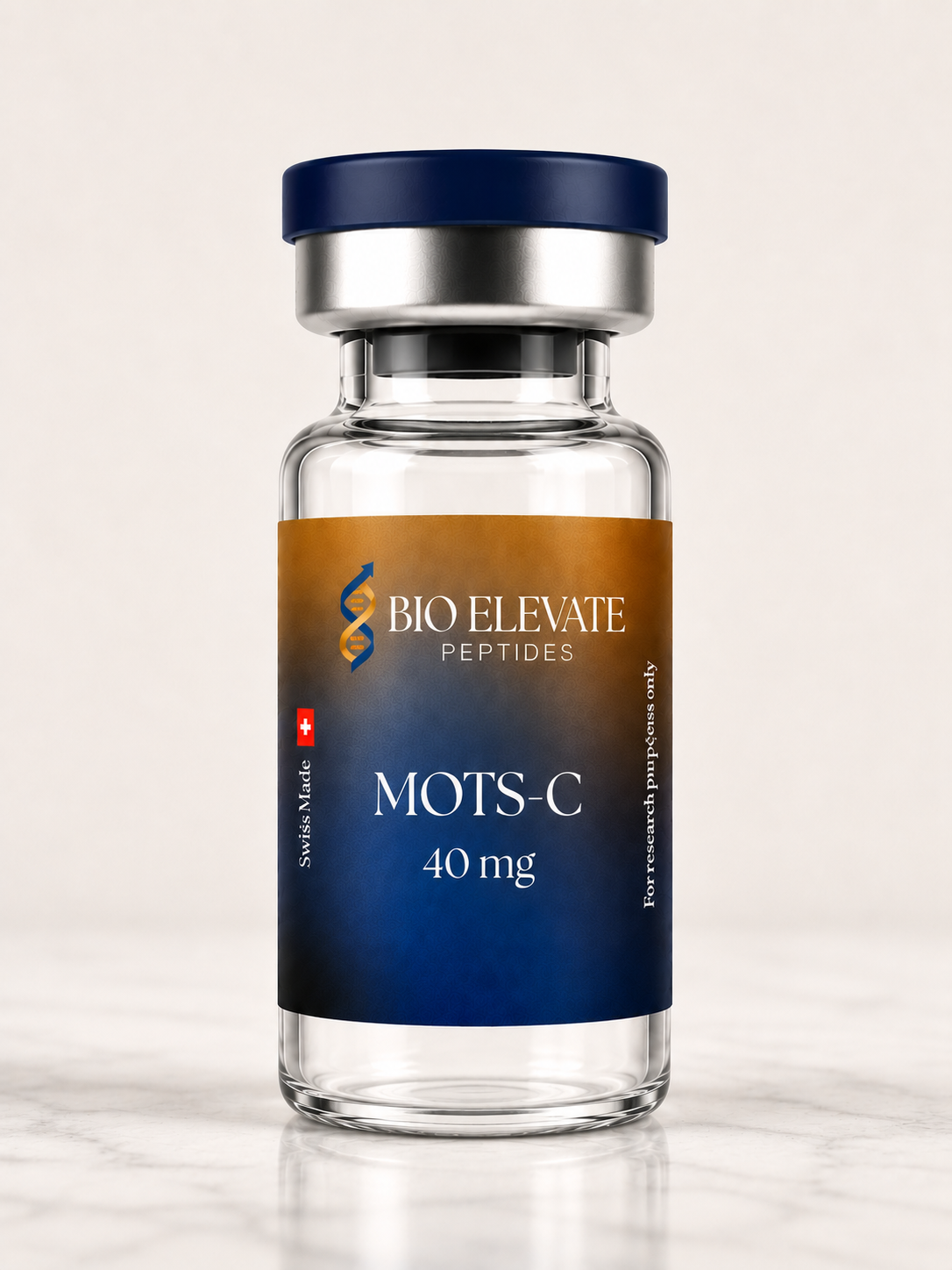
MOTS-c | 40mg Research Grade · Swiss Manufactured · Lyophilized
Overview
MOTS-c (Mitochondrial Open Reading Frame of the Twelve S rRNA Type-c) is a 16-amino acid mitochondria-derived peptide (MDP) encoded within the 12S ribosomal RNA gene of the mitochondrial genome — a discovery that fundamentally challenged the long-held assumption that mitochondrial DNA encodes only structural components of the respiratory chain. First identified and characterized in 2015 by Dr. Pinchas Cohen and colleagues at the USC Leonard Davis School of Gerontology, MOTS-c represents a paradigm-shifting class of signaling molecule: a retrograde mitochondrial hormone capable of translocating from mitochondria to the nucleus in response to metabolic stress, where it directly regulates nuclear gene expression to restore metabolic homeostasis. This unprecedented mitochondria-to-nucleus communication axis has positioned MOTS-c at the forefront of mitochondrial biology, metabolic research, and longevity science. As the most studied mitochondria-derived peptide in the emerging MDP class, MOTS-c commands a rapidly expanding research profile spanning insulin sensitivity, exercise biology, aging, obesity, and inflammatory disease — making it one of the most scientifically compelling peptides to enter the research landscape in the past decade.
Sequence
Tyr-Arg-Trp-Leu-Met-Ser-Cys-Pro-Ser-Pro-Ser-Leu-Trp-Lys-Lys-Cys-OH
Molecular Formula: C₈₉H₁₄₀N₂₄O₂₅S₃ Molecular Weight: 2174.37 g/mol CAS Number: 1457071-32-7 Appearance: White lyophilized powder Purity: ≥ 99% (HPLC verified)
Discovery & Scientific Significance
MOTS-c represents one of the most consequential peptide discoveries of the 21st century, redefining the functional scope of the mitochondrial genome:
- Identified in 2015 by Dr. Pinchas Cohen’s laboratory through bioinformatic analysis of previously overlooked open reading frames within mitochondrial rRNA genes
- Demonstrated to be evolutionarily conserved across vertebrate species, suggesting fundamental biological importance preserved across hundreds of millions of years of evolution
- Established the existence of a previously unrecognized class of mitochondrial hormones — signaling molecules originating from mitochondrial DNA that act on distant cellular compartments including the nucleus and systemic circulation
- Circulating MOTS-c levels in humans have been shown to decline with age and correlate with metabolic health parameters, positioning it as both a biomarker and potential effector in the biology of aging
- Plasma MOTS-c concentrations are significantly elevated following exercise, suggesting a role as an exercise-mimetic or exercise-sensitizing signal in metabolic adaptation research
Mechanism of Action
MOTS-c operates through a sophisticated, stress-responsive signaling framework that integrates mitochondrial bioenergetic status with nuclear transcriptional regulation and systemic metabolic control:
Mitochondrial Origin & Stress-Responsive Release
- MOTS-c is constitutively produced within mitochondria and released into the cytoplasm in response to mitochondrial stress, metabolic perturbation, or energetic imbalance
- Circulating levels respond dynamically to physiological stimuli including exercise, caloric restriction, and aging — establishing it as a genuine mitochondrial endocrine signal
Nuclear Translocation & Gene Regulation
- A defining feature of MOTS-c biology is its capacity to translocate to the nucleus under conditions of metabolic stress, where it directly binds to and regulates nuclear DNA
- Nuclear MOTS-c modulates the ARE (antioxidant response element) pathway, activating Nrf2-dependent cytoprotective and antioxidant gene expression programs
- This retrograde mitochondria-to-nucleus signaling represents a fundamentally novel mechanism of mitochondrial-nuclear crosstalk with broad implications for cellular stress adaptation research
AMPK Pathway Activation
- MOTS-c is a potent activator of AMP-activated protein kinase (AMPK) — the master cellular energy sensor — mimicking the metabolic effects of energy depletion and exercise at the molecular level
- AMPK activation drives glucose uptake, fatty acid oxidation, mitochondrial biogenesis, and suppression of anabolic energy-consuming pathways
- This mechanism underlies MOTS-c’s insulin-sensitizing effects and positions it as a molecular exercise mimetic of considerable research interest
Folate Cycle & One-Carbon Metabolism
- MOTS-c has been shown to inhibit the folate cycle within the mitochondrial one-carbon metabolic network, leading to AICAR accumulation — an endogenous AMPK activator
- This indirect AMPK activation pathway via one-carbon metabolism represents a unique mechanism distinguishing MOTS-c from other AMPK-activating compounds and providing a direct link between mitochondrial metabolic sensing and systemic insulin sensitivity
Inflammatory Pathway Modulation
- MOTS-c attenuates NF-κB signaling and suppresses pro-inflammatory cytokine production including TNF-α, IL-6, and IL-1β
- Anti-inflammatory activity has been demonstrated across multiple tissue types including adipose, hepatic, and vascular endothelial models
- Positions MOTS-c as a relevant research tool for inflammaging — the chronic low-grade inflammation that drives age-related metabolic and functional decline
Skeletal Muscle Metabolism
- MOTS-c enhances glucose transporter (GLUT4) translocation and insulin-independent glucose uptake in skeletal muscle — a key mechanism underlying its insulin-sensitizing profile
- Promotes mitochondrial biogenesis and oxidative fiber adaptation in muscle tissue models
- Regulates lipid oxidation and substrate switching between glucose and fatty acid utilization
Research Applications
MOTS-c’s unique position at the convergence of mitochondrial biology, metabolic regulation, exercise physiology, and aging science generates an exceptionally broad and rapidly evolving research profile:
Metabolic Disease & Insulin Resistance Research
- Type 2 diabetes models — skeletal muscle insulin resistance, GLUT4 dysregulation, and glucose homeostasis studies
- Obesity models — adipose tissue dysfunction, lipotoxicity, and ectopic fat deposition research
- Non-alcoholic fatty liver disease (NAFLD/NASH) — hepatic insulin resistance and mitochondrial lipid metabolism
- Pancreatic β-cell function and glucose-stimulated insulin secretion studies
- Metabolic syndrome — multi-tissue insulin resistance and dyslipidemia pathway research
Exercise Biology & Physical Performance Research
- Exercise mimetic studies — replication of molecular exercise adaptations in sedentary models
- Skeletal muscle mitochondrial biogenesis and oxidative capacity adaptation
- AMPK-mediated metabolic reprogramming in response to endurance and resistance exercise models
- Age-related decline in exercise capacity and muscle metabolic flexibility research
- Post-exercise recovery and muscle repair pathway studies
Aging & Longevity Research
- One of the most compelling peptides in contemporary geroscience — circulating MOTS-c levels inversely correlate with biological aging markers in human studies
- Lifespan extension models — preclinical studies have reported significant extension of both mean and maximum lifespan in aged mouse models with exogenous MOTS-c administration
- Hallmarks of aging research — mitochondrial dysfunction, metabolic dysregulation, chronic inflammation, and loss of proteostasis
- Healthspan preservation — functional capacity, metabolic flexibility, and physical performance in aging models
- Centenarian genetics research — specific MOTS-c variants have been identified at higher frequency in long-lived human populations, including Japanese centenarians
Mitochondrial Biology Research
- Mitochondria-to-nucleus retrograde signaling — a rapidly expanding and poorly understood field of cell biology
- Mitochondrial-derived peptide (MDP) class characterization and receptor identification studies
- Mitochondrial stress response pathways and adaptive signaling
- Mitochondrial biogenesis, dynamics, and quality control research
Inflammatory & Immune Research
- Inflammaging pathway studies — chronic sterile inflammation in metabolic and aging models
- Sepsis models — systemic inflammatory response and organ protection research
- Adipose tissue macrophage polarization and metabolic inflammation studies
- Autoimmune disease models — immune metabolic regulation research
Bone & Musculoskeletal Research
- Osteoporosis models — MOTS-c has demonstrated effects on osteoblast differentiation and bone mineral density in aged animal models
- Sarcopenia research — age-related skeletal muscle mass and function decline
- Bone marrow adiposity and hematopoietic niche regulation studies
Cardiovascular Research
- Cardiac metabolic flexibility and substrate utilization studies
- Atherosclerosis models — vascular endothelial function and metabolic inflammation
- Heart failure associated metabolic dysfunction research
Comparative Profile — Mitochondria-Derived Peptides & Exercise Mimetics
| Property | MOTS-c | Humanin | SS-31 | AICAR |
|---|---|---|---|---|
| Mitochondrial Genome Encoded | ✅ | ✅ | ❌ | ❌ |
| Nuclear Translocation | ⭐⭐⭐⭐⭐ | ❌ | ❌ | ❌ |
| AMPK Activation | ⭐⭐⭐⭐⭐ | ⭐⭐ | ⭐⭐ | ⭐⭐⭐⭐⭐ |
| Insulin Sensitization | ⭐⭐⭐⭐⭐ | ⭐⭐⭐ | ⭐⭐ | ⭐⭐⭐⭐ |
| Exercise Mimetic Activity | ⭐⭐⭐⭐⭐ | ⭐⭐ | ⭐⭐ | ⭐⭐⭐⭐ |
| Cardiolipin / ETC Targeting | ❌ | ❌ | ⭐⭐⭐⭐⭐ | ❌ |
| Neuroprotection | ⭐⭐⭐ | ⭐⭐⭐⭐⭐ | ⭐⭐⭐⭐ | ⭐⭐⭐ |
| Longevity Research Data | ⭐⭐⭐⭐⭐ | ⭐⭐⭐⭐ | ⭐⭐⭐ | ⭐⭐⭐ |
| Anti-inflammatory Activity | ⭐⭐⭐⭐ | ⭐⭐⭐⭐ | ⭐⭐⭐ | ⭐⭐⭐ |
| Research Publication Growth Rate | ⭐⭐⭐⭐⭐ | ⭐⭐⭐⭐ | ⭐⭐⭐⭐ | ⭐⭐⭐ |
Combination Research Context
MOTS-c is increasingly co-studied alongside complementary mitochondria-targeting and longevity-relevant peptides to investigate converging and synergistic mechanisms:
- MOTS-c + SS-31 — complementary mitochondrial targeting: MOTS-c addresses metabolic signaling and nuclear gene regulation while SS-31 directly optimizes ETC efficiency and cardiolipin integrity; together they address mitochondrial dysfunction across both functional and structural dimensions
- MOTS-c + Humanin — dual MDP co-investigation; both peptides are encoded within the mitochondrial 12S rRNA gene region and share cytoprotective and metabolic regulatory roles, with Humanin demonstrating particularly potent neuroprotective activity complementing MOTS-c’s metabolic profile
- MOTS-c + Epithalon — longevity biology research pairing; MOTS-c addresses metabolic healthspan determinants while Epithalon targets telomeric and neuroendocrine aging mechanisms — together covering two of the most prominent hallmarks of aging
Quality & Manufacturing
BioElevate MOTS-c is synthesized in our Swiss GMP-compliant facility using solid-phase peptide synthesis (SPPS) with Fmoc chemistry. The 16-amino acid sequence containing two cysteine residues requires precise disulfide bond management and oxidative folding control to ensure correct tertiary structure and biological activity. Each synthesis run incorporates careful cysteine protection strategy and controlled oxidation conditions. Every batch undergoes comprehensive independent quality verification:
- Reverse-phase HPLC — purity ≥ 99% confirmed
- High-resolution mass spectrometry (HRMS) — full molecular weight and disulfide bond confirmation
- Disulfide bond integrity verification — correct Cys7-Cys16 pairing confirmed
- Endotoxin testing — LAL method, endotoxin-free certification
- Sterility testing — USP <71> compliant
- Amino acid analysis (AAA) — compositional sequence verification
- Certificate of Analysis (CoA) — issued per batch, available upon request
Supplied As
- 40mg lyophilized powder per vial
- Sealed under inert nitrogen atmosphere to prevent oxidation
- Recommended storage: −20°C, protected from light and moisture
- Shelf life: 24 months (lyophilized); 30 days (reconstituted at 4°C)
- Format designed to support extended multi-experiment research protocols
Reconstitution
Reconstitute with sterile bacteriostatic water. For the 40mg vial, introduce solvent slowly along the inner vial wall in incremental additions, gently swirling between each addition until the lyophilized cake is fully dissolved. Do not vortex or shake vigorously. MOTS-c demonstrates good aqueous solubility. Allow the vial to equilibrate to room temperature prior to use. Once reconstituted, store at 4°C and use within 30 days. Due to the presence of cysteine residues, minimize exposure to oxidizing conditions during handling. Aliquoting into smaller working volumes prior to storage is strongly recommended to avoid repeated freeze-thaw cycles and preserve disulfide bond integrity across extended research timelines.
⚠️ For Research Use Only. This product is intended solely for in vitro and laboratory research purposes. Not for human or veterinary use. Not for consumption. BioElevate products are sold exclusively to licensed research institutions and qualified professionals.

Reviews
There are no reviews yet.