
Description
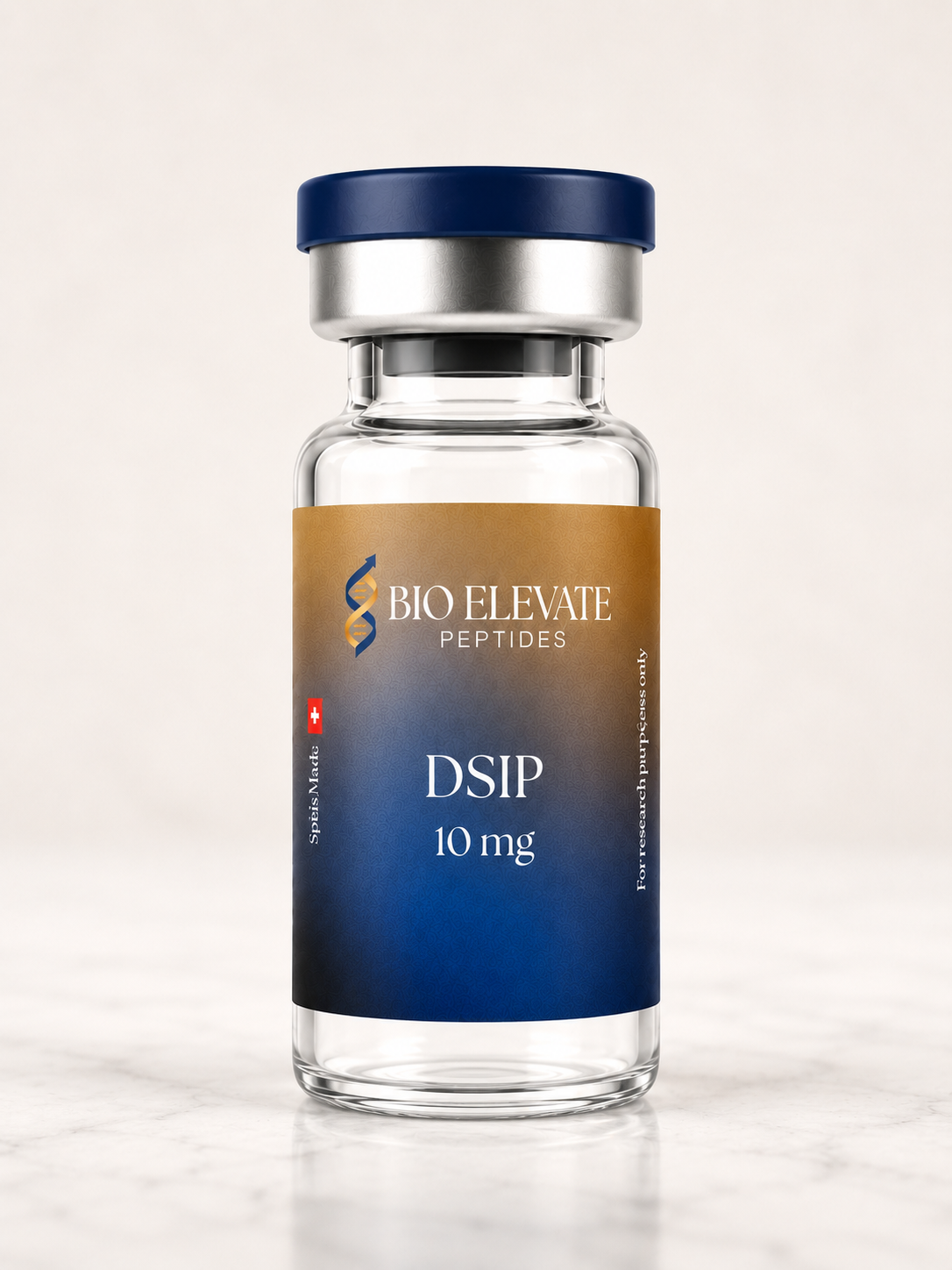
DSIP | 10mg Research Grade · Swiss Manufactured · Lyophilized
Overview
DSIP (Delta Sleep-Inducing Peptide) is a naturally occurring neuropeptide of nine amino acids first isolated in 1974 by Marcel Monnier and colleagues at the University of Basel from the cerebral venous blood of rabbits during electrically induced slow-wave sleep. This landmark discovery — demonstrating that a small, diffusible peptide could transfer a specific behavioral and electrophysiological sleep state between animals — opened an entirely new chapter in the neuroscience of sleep regulation and established DSIP as one of the founding molecules of the field now known as somogenic peptide biology. Endogenously expressed in the hypothalamus, limbic system, pituitary gland, and peripherally in the gut, pancreas, adrenal cortex, and testes, DSIP demonstrates a biological distribution that immediately signals its role extends far beyond sleep initiation into neuroendocrine regulation, stress axis modulation, and systemic homeostatic control. Despite its name, decades of subsequent research have revealed DSIP to be a uniquely multifunctional neuropeptide whose research profile encompasses sleep architecture, HPA axis regulation, antioxidant biology, nociception, oncology, and circadian rhythm modulation — making it one of the most scientifically intriguing and mechanistically complex peptides of its size in the neuroendocrine research landscape. Its ability to cross the blood-brain barrier with relative ease, combined with its remarkably low toxicity profile across all studied concentrations and models, further distinguishes DSIP as an exceptional research tool for both central and peripheral neuroendocrine investigations.
Sequence
Trp-Ala-Gly-Gly-Asp-Ala-Ser-Gly-Glu
Molecular Formula: C₃₅H₄₈N₈O₁₅ Molecular Weight: 848.80 g/mol CAS Number: 62568-57-4 Appearance: White lyophilized powder Purity: ≥ 99% (HPLC verified)
Discovery & Scientific Context
DSIP’s origin story is among the most elegant in neuropeptide science — a discovery born from a deceptively simple but conceptually audacious experimental premise:
- First characterized in 1974 by Monnier et al. at the University of Basel through cross-perfusion experiments demonstrating that dialysate from the cerebral venous blood of electrically sleep-stimulated donor rabbits could induce slow-wave delta sleep in recipient animals — establishing for the first time that sleep had a humoral, peptidergic dimension
- Subsequently isolated, sequenced, and synthesized by Schoenenberger and colleagues in 1977, enabling systematic pharmacological investigation
- Identified as endogenously present across a remarkable range of tissues including hypothalamus, limbic structures, pituitary, pineal gland, gut, pancreatic islets, adrenal cortex, and gonads — an unusually broad distribution for a neuropeptide, suggesting pleiotropic systemic roles beyond sleep
- Demonstrated capacity to cross the blood-brain barrier in both directions — a pharmacokinetically significant property that distinguishes DSIP from many peptides of comparable size and enables bidirectional central-peripheral signaling research
- Circulating DSIP levels exhibit a pronounced circadian rhythm, rising during the dark phase and falling during light — directly linking it to the circadian biology that governs sleep-wake cycling and neuroendocrine pulsatility
- Despite being characterized over five decades ago, DSIP continues to attract active research interest across sleep medicine, neuroendocrinology, stress biology, and oncology — a testament to the depth and breadth of its biological activity
Mechanism of Action
DSIP’s mechanisms of action are notably complex for a nonapeptide, operating through multiple receptor systems and signaling pathways across both central and peripheral biological contexts:
Sleep Architecture & EEG Modulation
- DSIP’s defining and eponymous activity — promotion of delta wave (0.5-4 Hz) slow-wave sleep — is mediated through modulation of hypothalamic and thalamic neuronal activity governing sleep stage transitions
- Reduces sleep onset latency and increases the proportion of total sleep time occupied by restorative slow-wave sleep phases in preclinical models
- Modulates thalamocortical oscillation circuits — the neural networks generating the characteristic synchronized low-frequency activity of deep sleep — via interactions with GABAergic and glutamatergic transmission
- Unlike classical sedative-hypnotic compounds that act nonspecifically on GABA-A receptors, DSIP’s somogenic effects appear to act through physiologically appropriate sleep-promoting pathways, preserving sleep architecture rather than imposing pharmacological sedation
HPA Axis & Stress Response Regulation
- One of DSIP’s most extensively characterized properties — potent modulation of the hypothalamic-pituitary-adrenal (HPA) axis stress response system
- Inhibits basal and stress-induced ACTH secretion from the anterior pituitary, attenuating the upstream drive for cortisol production
- Reduces corticotropin-releasing hormone (CRH) release from the hypothalamus, acting at the apex of the HPA cascade
- Demonstrates stress-normalizing rather than simply stress-suppressing activity — buffering excessive HPA activation while preserving appropriate stress responsivity, a nuanced profile with significant implications for chronic stress, burnout, and allostatic load research
- Modulates glucocorticoid receptor sensitivity in limbic structures, with relevance to research into stress-related mood disorders and HPA dysregulation syndromes
Neuroendocrine & Pituitary Regulation
- Exerts complex modulatory effects on pituitary hormone secretion across multiple axes:
- GH axis — stimulates episodic growth hormone release in a pattern consistent with physiological sleep-associated GH pulses, linking its sleep-promoting and somatotropic activities
- LH/FSH — modulates gonadotropin pulsatility via hypothalamic GnRH regulation, with relevance to reproductive neuroendocrinology research
- TSH — influences thyroid-stimulating hormone secretion, connecting DSIP to metabolic rate regulation and thyroid axis research
- Prolactin — bidirectional modulatory effects on prolactin secretion depending on circadian phase and baseline hormonal context
- This multi-axis pituitary modulatory activity positions DSIP as a uniquely broad neuroendocrine research tool capable of probing the integrative function of the hypothalamic-pituitary unit
Antioxidant & Cytoprotective Activity
- DSIP demonstrates significant free radical scavenging activity, attributed in part to the tryptophan residue at position 1 — a well-characterized endogenous antioxidant amino acid
- Upregulates expression of superoxide dismutase (SOD) and other antioxidant defense enzymes in neuronal and peripheral tissue models
- Demonstrates mitochondrial cytoprotective effects in oxidative stress models, reducing lipid peroxidation and preserving mitochondrial membrane integrity
- Antioxidant activity is particularly well-documented in aging and neurodegeneration research contexts, where oxidative stress represents a primary driver of progressive functional decline
Opioid System Interaction & Nociception
- DSIP interacts with the endogenous opioid system — demonstrating partial agonist or modulatory activity at opioid receptors, contributing to its analgesic and stress-modulatory properties
- Modulates enkephalin and beta-endorphin release in limbic and hypothalamic circuits
- Research into DSIP’s nociceptive modulation has explored its utility in chronic pain models, where its opioid system interaction profile distinguishes it from conventional analgesic research compounds
- May contribute to the well-documented relationship between sleep disruption and pain sensitization — a mechanistic link of growing clinical research significance
Oncostatic Activity
- A distinctly underexplored but scientifically compelling dimension of DSIP’s research profile — multiple studies have identified tumor growth inhibition activity in carcinogen-exposed and transplanted tumor models
- Mechanisms under investigation include normalization of circadian rhythm disruption in tumor-bearing models, immunomodulation, and direct effects on tumor cell proliferation and differentiation pathways
- Interaction with melatonin signaling and the pineal-immune axis has been proposed as a contributing mechanism, given DSIP’s role in circadian neuroendocrine regulation
Autonomic Nervous System Modulation
- DSIP modulates sympathetic nervous system tone, reducing excessive sympathetic activation associated with stress, sleep disruption, and cardiovascular dysregulation
- Influences heart rate variability (HRV) parameters in preclinical models — a measure of autonomic balance with increasing research relevance as a biomarker of cardiovascular and stress-related health
Research Applications
DSIP’s unique position at the intersection of sleep neuroscience, neuroendocrinology, stress biology, and circadian rhythm research generates a distinctive and scientifically rich research profile:
Sleep Biology & Architecture Research
- The foundational application — slow-wave sleep induction, delta wave promotion, and sleep stage architecture studies
- Sleep onset latency and sleep continuity research in insomnia and sleep fragmentation models
- REM/NREM sleep balance and sleep stage transition dynamics
- Sleep deprivation recovery models — restorative sleep rebound and delta power normalization
- Polysomnographic biomarker studies — EEG spectral analysis and sleep architecture quantification
- Comparative somogenic peptide research — DSIP vs. other endogenous sleep-promoting factors including adenosine, prostaglandin D2, and muramyl peptides
Circadian Rhythm & Chronobiology Research
- Circadian rhythm normalization in jet lag, shift work, and light-cycle disruption models
- Melatonin-DSIP interaction studies and pineal gland neuroendocrine axis research
- Circadian gene expression — CLOCK, BMAL1, PER, and CRY gene regulation in relation to DSIP activity
- Chronobiological modulation of neuroendocrine pulsatility and hormonal rhythm normalization
- Age-related circadian rhythm fragmentation and amplitude reduction models
HPA Axis & Stress Research
- Chronic stress models — HPA axis hyperactivation, allostatic load, and glucocorticoid dysregulation
- Stress resilience and adaptation — normalization of exaggerated stress responses in vulnerable models
- CRH and ACTH secretion dynamics under basal, acute stress, and chronic stress conditions
- Glucocorticoid receptor sensitivity and feedback regulation studies
- Burnout and fatigue models — adrenal exhaustion and HPA axis recovery research
Neuroendocrine Research
- Multi-axis pituitary hormone regulation — GH, LH, FSH, TSH, and prolactin secretion dynamics
- Somatotropic axis — sleep-associated GH pulse characterization and DSIP’s contribution to nocturnal GH secretory activity
- Hypothalamic neuropeptide interaction networks — DSIP crosstalk with CRH, GHRH, GnRH, and TRH
- Pituitary responsiveness and receptor sensitivity modulation research
- Neuroendocrine aging — age-related hormonal rhythm disruption and restoration models
Neurological & Neuroprotection Research
- Oxidative stress-induced neuronal damage models — DSIP cytoprotection and antioxidant defense research
- Neurodegenerative disease — Alzheimer’s, Parkinson’s, and aging-related cognitive decline models
- Epilepsy and neuronal hyperexcitability — DSIP’s modulation of GABAergic and glutamatergic balance
- Withdrawal and addiction models — opioid withdrawal attenuation research exploiting DSIP’s opioid system interaction
- Anxiety and depression models — HPA axis normalization and limbic system modulation research
- Traumatic brain injury — neuroprotection and sleep architecture disruption in post-TBI models
Oncology Research
- Tumor growth inhibition models — direct and circadian-mediated mechanisms
- Circadian rhythm disruption as a cancer risk factor — DSIP restoration of normal chronobiological signaling in tumor-bearing models
- Immune-oncology interactions — DSIP’s immunomodulatory activity in cancer model contexts
- Melatonin-DSIP synergy in circadian-based oncology research
Cardiovascular & Autonomic Research
- Autonomic nervous system balance — sympathovagal ratio and HRV studies
- Stress-induced cardiovascular dysregulation — DSIP attenuation of sympathetic overdrive
- Hypertension models — neuroendocrine and autonomic contributors to elevated blood pressure
- Cardiac rhythm and sleep-disordered breathing interaction studies
Pain & Nociception Research
- Chronic pain models — DSIP opioid system interaction and analgesic activity characterization
- Sleep-pain bidirectional relationship — how sleep architecture improvement modulates pain sensitivity
- Central sensitization models — spinal and supraspinal nociceptive pathway modulation
- Fibromyalgia and widespread pain syndrome models — HPA axis and sleep disruption interactions
Comparative Profile — Neuroendocrine & Sleep Biology Peptide Class
| Property | DSIP | Selank | Semax | Epithalon |
|---|---|---|---|---|
| Delta Sleep Induction | ⭐⭐⭐⭐⭐ | ❌ | ❌ | ⭐⭐⭐ |
| HPA Axis Modulation | ⭐⭐⭐⭐⭐ | ⭐⭐⭐⭐ | ⭐⭐⭐ | ⭐⭐⭐ |
| Circadian Rhythm Regulation | ⭐⭐⭐⭐⭐ | ⭐⭐ | ⭐⭐ | ⭐⭐⭐⭐ |
| Anxiolytic / Stress Modulation | ⭐⭐⭐⭐ | ⭐⭐⭐⭐⭐ | ⭐⭐⭐⭐ | ⭐⭐⭐ |
| Neuroprotection | ⭐⭐⭐⭐ | ⭐⭐⭐⭐ | ⭐⭐⭐⭐⭐ | ⭐⭐⭐ |
| Antioxidant Activity | ⭐⭐⭐⭐ | ⭐⭐⭐ | ⭐⭐⭐ | ⭐⭐⭐⭐ |
| BBB Permeability | ⭐⭐⭐⭐⭐ | ⭐⭐⭐⭐⭐ | ⭐⭐⭐⭐⭐ | ⭐⭐⭐ |
| Oncostatic Activity | ⭐⭐⭐⭐ | ❌ | ❌ | ⭐⭐⭐⭐ |
| Multi-axis Pituitary Modulation | ⭐⭐⭐⭐⭐ | ⭐⭐ | ⭐⭐⭐ | ⭐⭐⭐⭐ |
| Research Publication Volume | ⭐⭐⭐⭐⭐ | ⭐⭐⭐⭐ | ⭐⭐⭐⭐ | ⭐⭐⭐⭐⭐ |
Combination Research Context
DSIP’s neuroendocrine and sleep-regulatory profile creates highly complementary research pairings with several other BioElevate catalog peptides:
- DSIP + Epithalon — circadian and neuroendocrine longevity research pairing of exceptional depth; DSIP addresses sleep architecture and HPA axis regulation while Epithalon targets pineal melatonin production and telomeric aging biology — together covering the neuroendocrine, chronobiological, and cellular dimensions of age-related decline in a single research framework
- DSIP + Selank — HPA axis and stress neurobiology research pairing; DSIP’s cortisol-attenuating and sleep-normalizing activity complements Selank’s anxiolytic, GABAergic, and BDNF-upregulating profile for comprehensive stress resilience and neuroimmune research
- DSIP + Semax — neuroprotection and neuroendocrine research; DSIP’s sleep architecture normalization and HPA modulation combined with Semax’s BDNF induction, cognitive enhancement, and neuroprotective activity across oxidative and ischemic injury models
- DSIP + Ipamorelin/CJC-1295 — somatotropic axis optimization research; DSIP promotes the physiological sleep-associated GH pulse environment while Ipamorelin/CJC-1295 amplifies GH release through dual GHS-R1a and GHRHR engagement — a mechanistically elegant combination for GH secretion dynamics research
Quality & Manufacturing
BioElevate DSIP is synthesized in our Swiss GMP-compliant facility using solid-phase peptide synthesis (SPPS) with Fmoc chemistry. The nine-residue sequence includes the tryptophan residue at position 1 that requires careful oxidation protection throughout synthesis and lyophilization to preserve indole ring integrity and prevent Trp degradation — a known vulnerability of Trp-containing peptides under suboptimal synthesis or storage conditions that BioElevate controls through inert atmosphere processing and strict light exclusion at every production stage. Every batch undergoes comprehensive independent quality verification:
- Reverse-phase HPLC — purity ≥ 99% confirmed
- High-resolution mass spectrometry (HRMS) — full molecular weight and sequence integrity confirmation
- Tryptophan oxidation monitoring — Trp-1 integrity and absence of oxidative degradation products verified
- Endotoxin testing — LAL method, endotoxin-free certification
- Sterility testing — USP <71> compliant
- Amino acid analysis (AAA) — compositional sequence verification
- Certificate of Analysis (CoA) — issued per batch, available upon request
Supplied As
- 10mg lyophilized powder per vial
- Sealed under inert nitrogen atmosphere with light-protective amber vial to preserve Trp-1 integrity
- Recommended storage: −20°C, protected from light and moisture
- Shelf life: 24 months (lyophilized); 30 days (reconstituted at 4°C)
Reconstitution
Reconstitute with sterile bacteriostatic water. DSIP demonstrates good aqueous solubility. Introduce solvent slowly along the inner vial wall and gently swirl until the lyophilized cake is fully dissolved. Do not vortex or shake vigorously. Protect from light throughout reconstitution and handling — the tryptophan residue at position 1 is susceptible to photo-oxidative degradation, and light exposure during handling should be minimized to preserve biological activity. Allow the vial to equilibrate to room temperature prior to use. Once reconstituted, store at 4°C in light-protected conditions and use within 30 days. Aliquoting into smaller working volumes prior to storage is strongly recommended to eliminate repeated freeze-thaw exposure and preserve peptide integrity across extended research timelines.
⚠️ For Research Use Only. This product is intended solely for in vitro and laboratory research purposes. Not for human or veterinary use. Not for consumption. BioElevate products are sold exclusively to licensed research institutions and qualified professionals.
Reviews
There are no reviews yet.